Building a brand system that scales
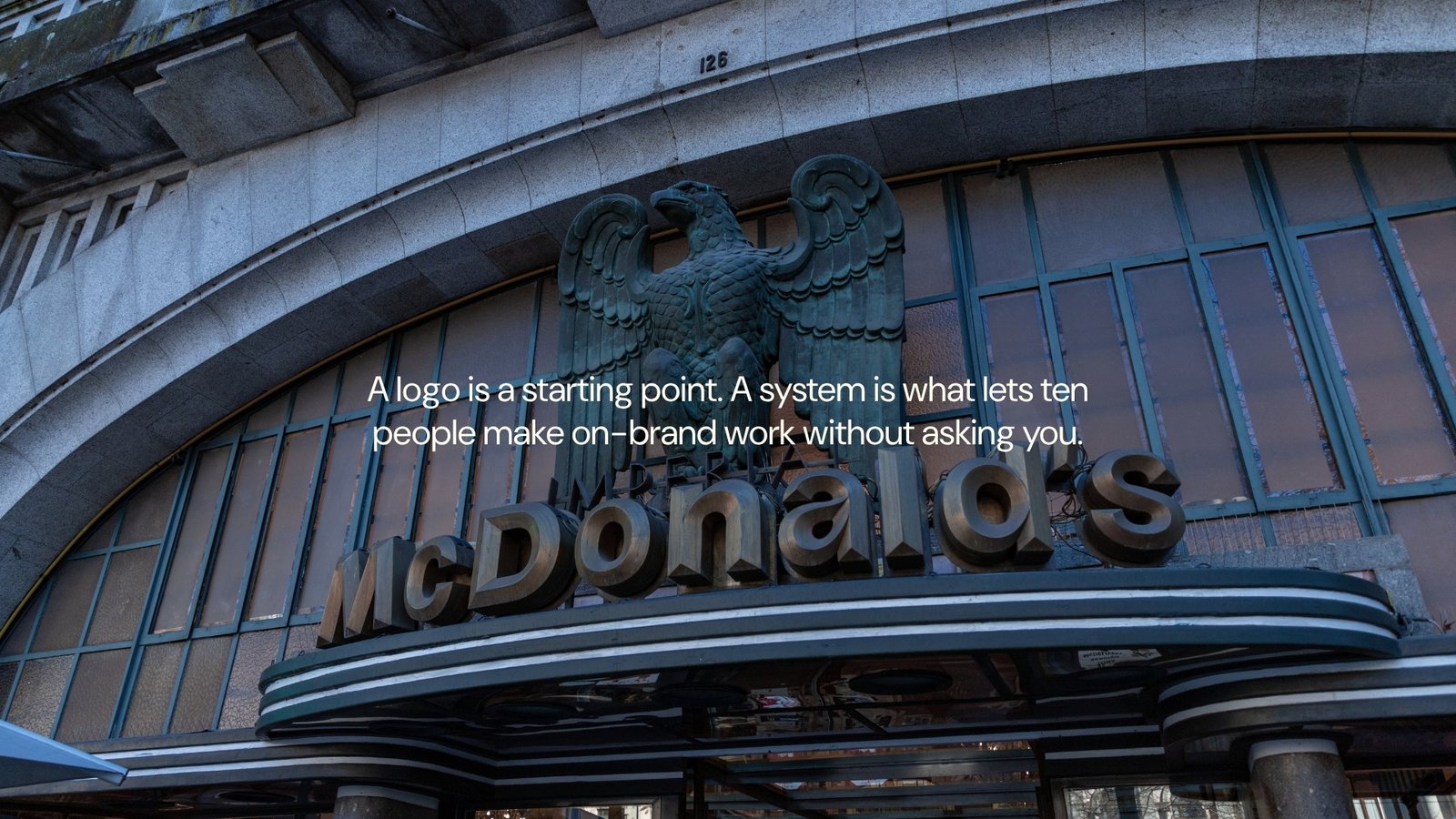
A brand system that scales is a set of rules — for logo use, colour, type, imagery, and tone — specific enough that anyone on your team, or any vendor you hire, can produce on-brand work without asking you first. A logo is a starting point. The system is what lets it survive contact with ten different people making things under your name.
The bottleneck isn't the logo, it's you
Most small and mid-size brands hit the same wall: the founder or the original designer is the only person who can tell if something's “on brand.” Every new flyer, slide deck, or social post routes back through them for approval, because nothing written down actually says what's allowed. That's not a brand problem, it's a bottleneck problem — and it gets worse exactly when the business is growing fastest.
What separates a logo file from a system
A logo file is an asset. A brand system is a decision framework, and the difference shows up in specifics: not just “our colour is gold” but the exact hex, where it's allowed to dominate and where it's an accent only. Not just “we use this font” but the type scale, the weights, and what happens when a heading has to wrap. A real system also states what's off-limits — the logo distortions, colour substitutions, and layout shortcuts that are tempting but forbidden.
The four things every scalable system defines
- Logo usage: clear space, minimum size, approved lockups, and backgrounds it can and can't sit on
- Colour and type: exact values, hierarchy, and pairing rules — not just a swatch and a font name
- Imagery and tone: the kind of photography, illustration, and voice that's “us” versus generic
- Guardrails: the five most common mistakes people make, named explicitly, so they don't happen twice
A brand system doesn't limit creativity — it's what lets creativity happen without you in the room.
Guidelines are only real if people actually use them
A forty-page PDF nobody opens isn't a system, it's a liability disguised as diligence. The guidelines that actually get used are built around the real workflow: a print vendor, a junior designer, and a freelance video editor should each be able to open the same document and get an unambiguous answer to “is this right?” If your team still messages you a screenshot to ask “does this look okay,” the system isn't done yet — and it should already account for the motion layer too, not just the static one.
A brand system doesn't limit creativity — it's what lets creativity happen without you in the room.
Frequently asked questions
How is a brand system different from brand guidelines?
In practice, not much — “system” just emphasizes that the rules are built to be applied by other people, not just documented for reference.
When does a small business actually need this, versus just a good logo?
The moment more than one person — an employee, a contractor, a print shop — is producing anything under your name. That's usually earlier than founders expect.
Want this kind of thinking on your brand?