The brief is the creative work
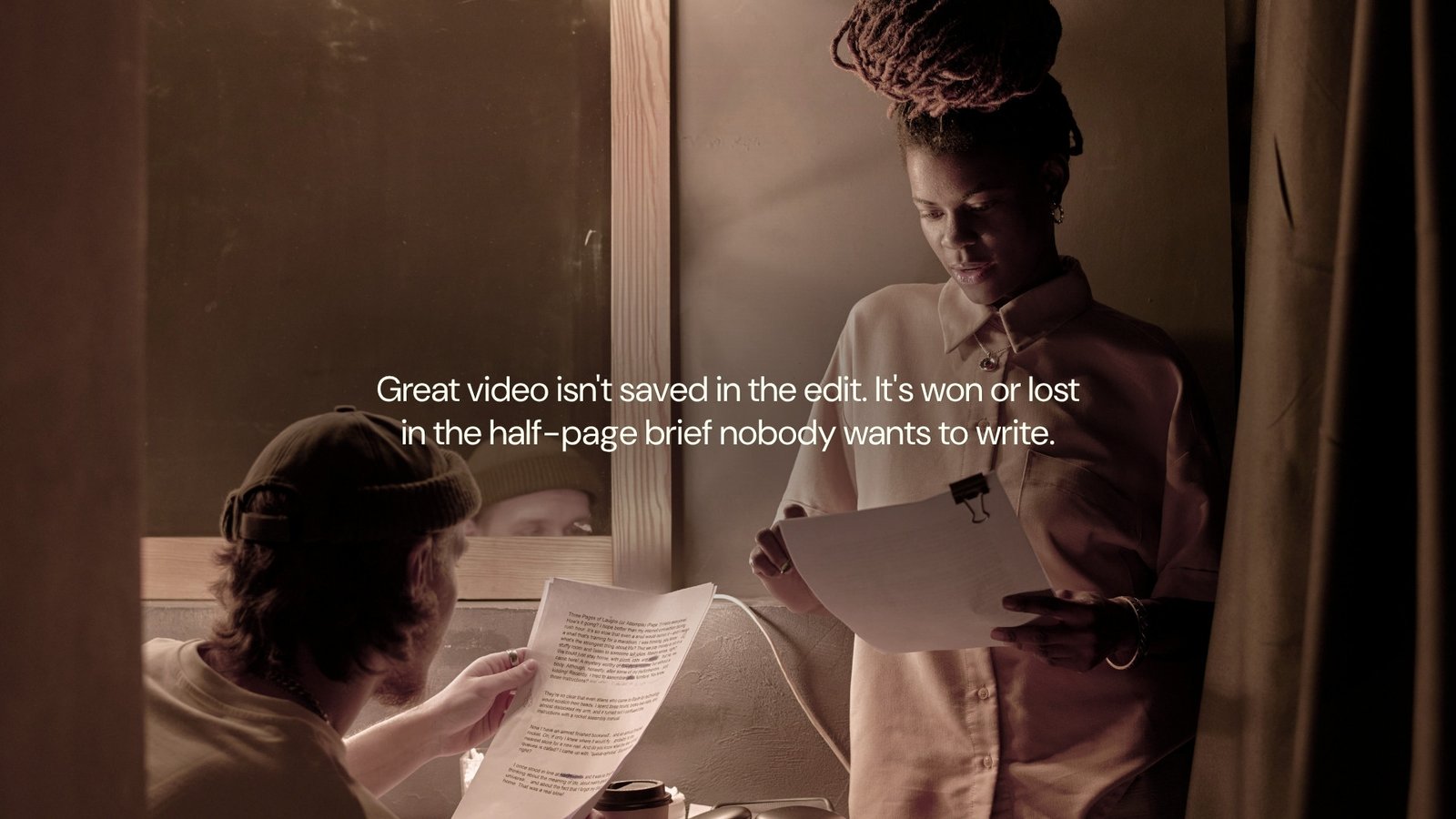
The brief is the creative work because most of what makes a video succeed or fail — the message, the audience, the one thing it needs to accomplish — gets decided before a camera turns on. Treating the brief as paperwork to get through, rather than the first draft of the idea, is the most common reason creative work underperforms.
Nobody fails in the edit
When a video doesn't land, the instinct is to blame the footage, the pacing, the edit. It's rarely any of those. By the time a project reaches post-production, the ceiling on how good it can be was already set — by whether the brief named a real audience, a specific goal, and one clear message instead of six. An edit can polish an idea. It can't invent one that was never there.
A brief is a decision document, not a wish list
A weak brief reads like a list of things the client likes: “modern, bold, but also warm, and maybe a bit playful.” A strong brief makes decisions: who exactly this is for, what they should feel in the first three seconds, what single action it should drive, and — just as important — what it deliberately leaves out. The best briefs we've worked from are often shorter than the weak ones. Half a page of clear decisions beats four pages of adjectives.
Half a page of clear decisions beats four pages of adjectives.
What a half-page brief actually contains
- The one thing the viewer should remember, in one sentence
- Who they are, specifically — not “everyone,” a named audience
- Where it will be seen, and for how long people will actually watch
- One clear action, and what happens if they don't take it
- What's explicitly out of scope, so nothing gets renegotiated mid-shoot
Writing it together beats handing it over
The best briefs aren't written by the client alone and handed to the studio, or written by the studio and rubber-stamped by the client. They're built together, in one working session, before a single frame is planned — because the client knows the business reality and the studio knows what actually reads on screen. That collaboration is the real creative work. Everything after it is execution. It's the same discipline behind videos as client attraction: know exactly what the piece needs to accomplish before deciding how it should look.
If your last video underperformed, don't look at the edit first. Look at the half-page that came before it.
Frequently asked questions
How long should a creative brief actually be?
Long enough to make every key decision, short enough that everyone reads all of it. For most videos, that's half a page — not a ten-page deck nobody opens twice.
Who should write the brief — the client or the studio?
Neither, alone. The strongest briefs come from a single working session where both sides make the calls together, before any planning starts.


Want this kind of thinking on your brand?